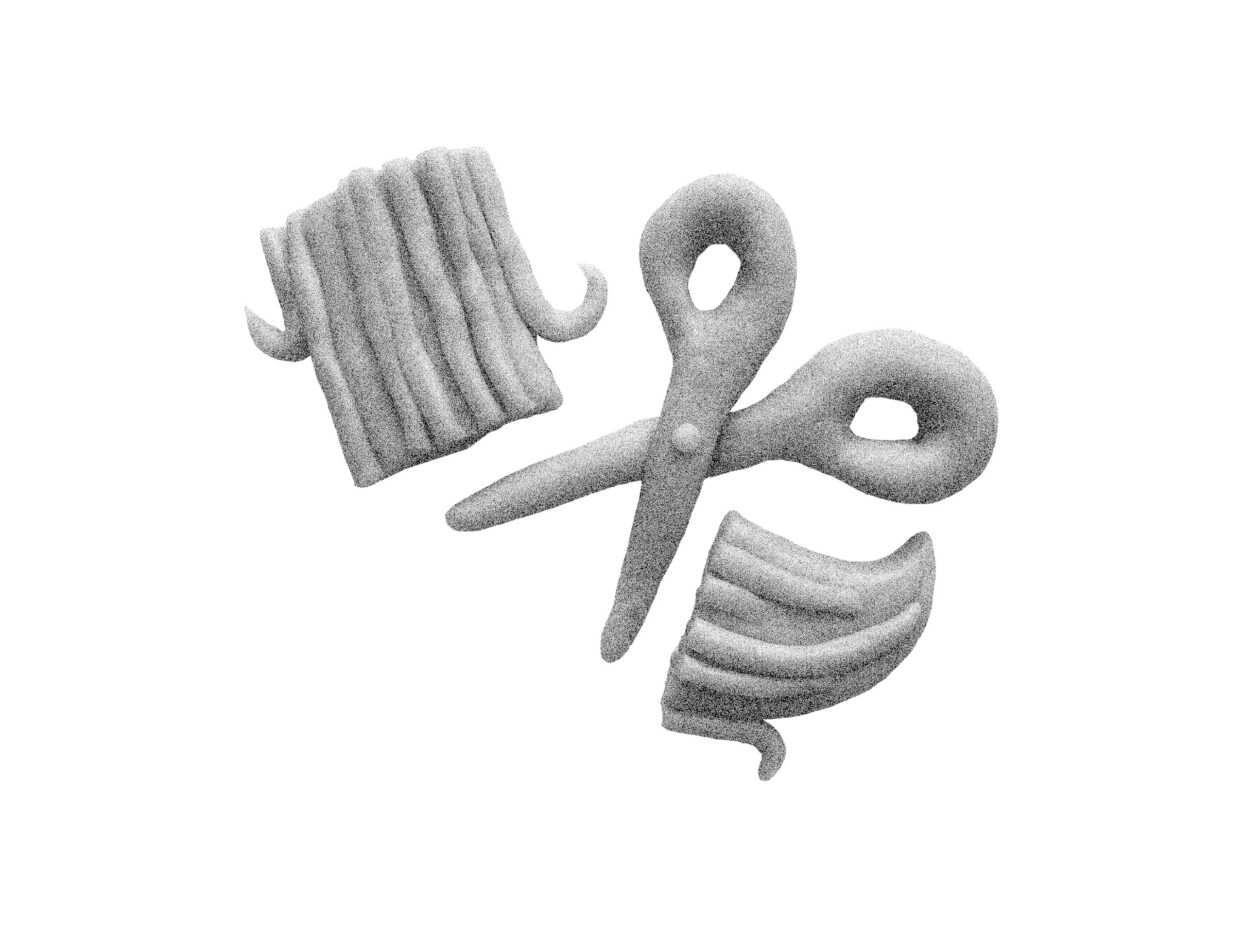
A Haircut Story. Only An Inch. Must It All Go? Titles like these began to populate my Amazon suggestions. Mostly self-published, with covers that featured lusciously long, supernaturally straight women’s hair. Just the hair, streaming down the length of the cover. No faces showing.
I could not figure out what algorithm I had triggered, or how, until, a few weeks later, I looked at my eleven-year-old daughter’s search history and realized ChatGPT had been composing haircut stories for her.
In her telling, the stories had begun with her asking for suggestions prior to an impending salon visit. (“What face shape do bangs go well with?”) Over the next couple of weeks, they evolved. The ones I saw, late products of a prolonged creative process, had become slow-burn lesbian erotica: think Ammonite, but in a hair salon. No sex — I’d set up content restrictions on her laptop — just women cutting each other’s hair oh-so-slowly, enjoying its increasing beauty in raptures. ChatGPT and my daughter had codeveloped an unintuitive set of aesthetic categories following which the software refined its narratives to her increasing satisfaction. “Would you like this story to be gentler? Would you like the haircut to be more precise?”
The stories haunt me. It was pulp, to be sure, but Dali-esque. A.I. hallucinations are one thing; this was A.I. surrealism, an automatized path of wish-fulfillment that pulled my daughter’s unconscious onto the screen without disrupting its strangeness. An avant-garde literary practice will emerge out of this, though I have told my daughter it’s for adults only.