

Noelle Bodick

A Nicely Situated Ideal | On the Public Sphere
Edward Ongweso Jr, Ege Yumuşak, Ismail Ibrahim, Madeleine Baker, Megan Marz, Noelle Bodick, Sam Adler-Bell, Sarah Brouillette, Tarpley Hitt
When the German philosopher Jürgen Habermas died in mid-March, the contentious debates about his ideas and influence that had stalked his career reappeared in posthumous assessments. Some recognized Habermas’s role in keeping Frankfurt School critical theory alive and defending the values of “democratically organized social life,” as Matt McManus wrote in Jacobin, against reactionaries. Others condemned Habermas’s own rightward drift, especially his “long history of being deliberately unquestioning of Israel,”...
A Blank Generation
Noelle Bodick
The late Habermas, theorizing the public sphere, rendered the coffeehouses of the past as discursive hubs, places of free exchange, with every caffeine-head a constitutionalist of sorts. It was a nicely situated ideal, pulled from the annals of eighteenth-century English history — all that yak and verbal sparring hemming in the dull, unimaginative control of autocrats and bureaucrats at large. Joseph Addison and Richard Steele convened a “little senate” at...
Back-Lasch
Noelle Bodick
To the jaded feminist of our day, family life can look like a losing proposition. Not for us the sentimentalizing of romance novels, pandering to the quaint longings of a bygone girlhood. If Jane Austen’s set could take a code of hypergamy as second nature, women today are instead taught — by writers, artists, theorists, brands — to want something very different: solitary selfhood, exalted friendships, and a romantic life...
No Returns | On Family Functions and Dysfunctions
Dan Brooks, Elisa Gonzalez, Gaby Del Valle, Karim Kazemi, Lydia Kiesling, Nancy Ko, Nawal Arjini, Noelle Bodick, P.E. Moskowitz, Paul McAdory, S.C. Cornell
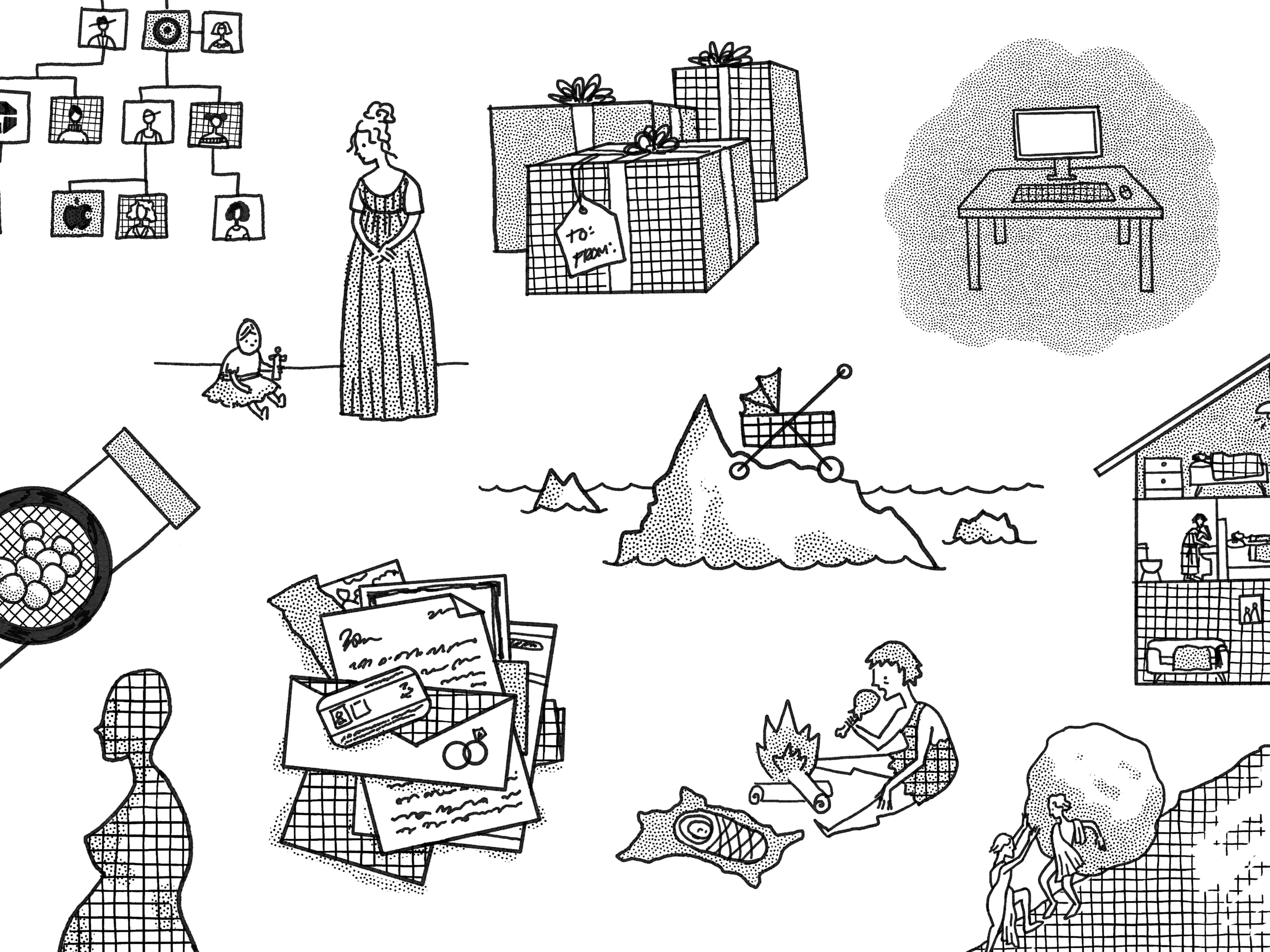
In December, The New Yorker asked, “How Did Polyamory Become So Popular?” in a piece that tracked the rise of the open relationship, from the obscure “province of utopian free-love communities” to its status as a mainstay of “Park Slope marriages and prestige television.” In January, New York magazine took on the same topic in a cover story, which explored the “increasingly mainstream world of ethical non-monogamy” and included “a...
A Pool of One’s Own | Group Biographies and the Female Friendship Vogue
Noelle Bodick
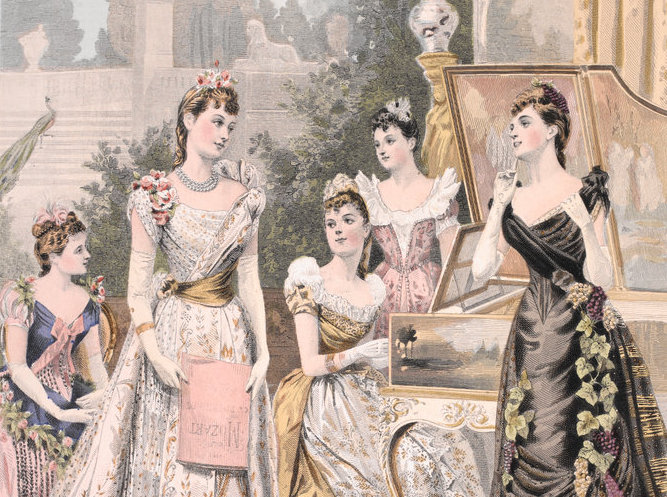
No friendships worthy of Flaubert’s exacting pen emerge from the Ursuline convent of Emma Bovary’s schooldays. Blame it on the local black market. Out of sight of the nuns, a matronly seamstress stashes books “full of love and lovers” in her apron smocks and slips copies to the older girls — hypnotizing tales of moonlit crossings, fainting damsels, horses ridden to death by perpetually late beaux. Only lovers (noblemen in...
