It seems likely that future historians — assuming they aren’t just leading us in oral recitation of Simpsons episodes around our post-electric bonfires — will remember 2025 as an inflection point in millennials’ path to power. The year began with JD Vance’s inauguration as the first millennial vice president, and it will end with Zohran Mamdani’s inauguration as the first millennial mayor of New York. In between these bookends, Bari Weiss took the reins at CBS News as the first millennial in charge of one of the big three broadcast news networks.
The Drift is a magazine founded and run by millennials. Once upon a time, it seemed certain that our generation would inject new life into politics and disrupt a moribund status quo. In 2013, Time magazine explained, in a cover story,“Why millennials will save us all.” Salon concurred: “Millennials will save us!” We came of age politically with Barack Obama (technically, though perhaps not spiritually, a baby boomer). In 2008, the older members of our generation helped deliver him the presidency — organizing for him, bringing his campaign online, and choosing him two to one. But as early as 2010, Obama’s support among young people began to dip below fifty percent. There’d been the cautious, bank-friendly response to the financial crisis that seemed to wipe out the economic prospects of older millennials just entering the job market. Then there was his failure to end the forever wars whose abuses had sparked the first experience of political outrage for many in our generation. Millennials further soured on Obama in his post-presidential era: in 2020, when Bernie Sanders had captivated millennial voters with his promise to attack rampant income inequality, Obama was reportedly troubled by the Silent Generation politician’s “revolutionary” rhetoric, and helped clear the field for Joe Biden’s nomination.
This October, when New Yorker editor (and baby boomer) David Remnick interviewed Mamdani, the mayoral candidate recalled volunteering for Obama, then Sanders. “Tell me about your sense of Obama vis-a-vis Bernie,” Remnick prompted, “because it seems to me that you admire Bernie Sanders’s politics a good deal more than Obama’s in retrospect.” In response, Mamdani explained that he was in high school when he volunteered for the Obama campaign. After college, when he and his underpaid colleagues at a progressive nonprofit started talking about unionizing, one leader in the effort was promptly fired. At that point, Mamdani said, he grew disenchanted “with liberal politics.” His interlocutor was unsatisfied. “Be honest,” Remnick said. “I know you were critical of Obama, you know, because of drones, for example,” pushing Mamdani to describe “the space between” him and the former president. “What was so exciting,” Mamdani said, “about the Obama presidency was also the possibility of more people seeing themselves in our democracy.” But in his own campaign, he wanted to home in on “the ways in which our own politicians here in New York City have failed us and our own politics has failed us,” he said, namely through “the choices that have been made of what to focus on and what to ignore.”
Mamdani’s runaway success vindicated his choices about what to focus on and what to ignore. Perhaps Mamdani also won because of his mastery of short-form vertical video; perhaps he won because he always wore a suit; because of his smile, and his infectious enthusiasm about the city; because he faced an exceptionally awful set of opponents; because he was unabashedly critical of Israel, unlike most of our AIPAC-funded politicians. But what he constantly and unfailingly put front and center was affordability: the economic issues that turned our generation left, and helped it fuel the resurgence of democratic socialism.
Generational turnover alone will not be sufficient to bring about a new political consensus. With Vance in the White House and Weiss in the CBS executive suite, the idea that, once the dinosaurs finally die off, our generation will band together and put its enlightened principles into practice has now been definitively unmasked as the fantasy it always was. Even so, we submit that our generation can’t be all bad.
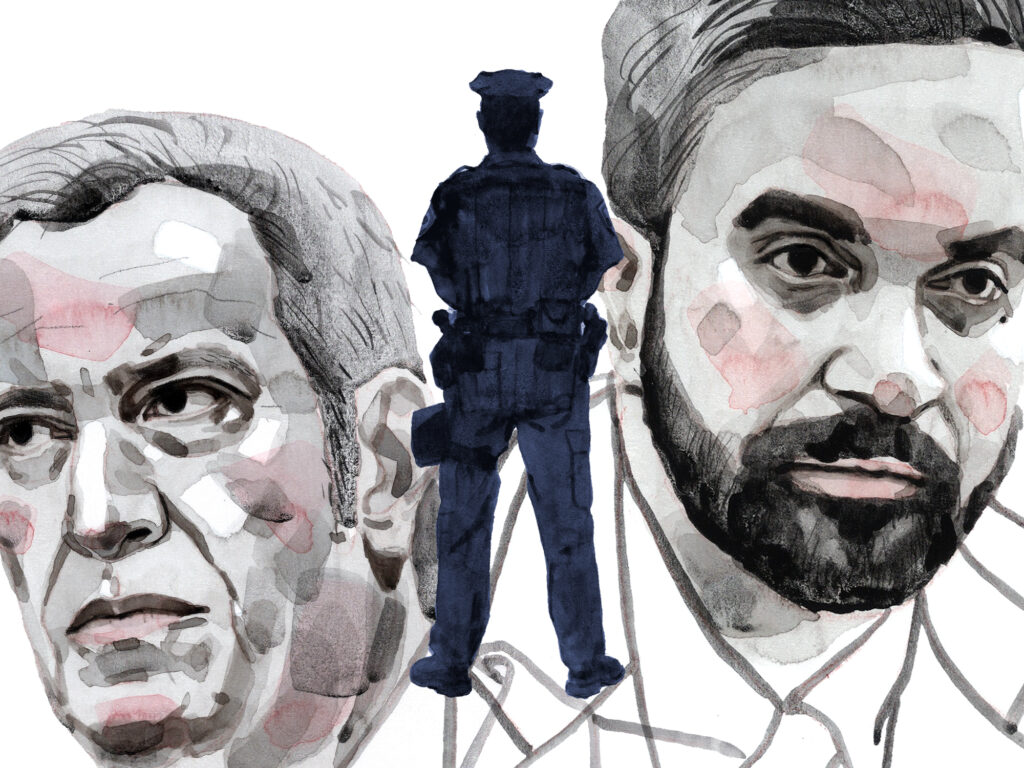
In this issue of The Drift, we’ve made some of our own choices about what to focus on and what to ignore. An interview with historian Stuart Schrader probes the origins and consequences of the relative invulnerability the police have acquired in our politics, and an essay by Katie Way warns of the costs of deference to police power in the new Mamdani administration. Madeleine Baker questions the wisdom of Stoicism and other philosophical self-help trends that urge us to focus on accepting our circumstances, while Daniel Yadin interrogates the sense of powerlessness that makes the romantasy genre such an attractive escape. Max Hancock punctures the mythology of the “digital twin,” one of corporate America’s latest tech romances. Yoni Gelernter considers the suicidal impulses at the heart of Zionism, and Séamus Malekafzali shows how the demand for gratitude ties Trump’s foreign policy to Bush-era neoconservatism. Our Dispatches examine the relationship between food and systems of power around the world, from famines in Gaza and southwestern Sudan to the role of industrial agriculture in deforestation and the distribution of meals in prisons. In our fiction section, stories by Mimi Diamond, Elisa Gonzalez, Will Hall, and Nick Foretek conjure a father, a wife, a dating show, and a pornography seminar, and an excerpt from Madeline Cash’s forthcoming novel Lost Lambs stages an inner beauty pageant. In poems by Kathleen Ma, Ethan Seeley, Michael Robbins, Oksana Maksymchuk, and Leslie McIntosh, a pig goes to a gas station, ants vote with their pocketbooks, Sappho stares at the sea, thunderclaps roll, and a worm is forced from home by the rain. Mentions deliver extremely abbreviated reviews of everything from Helena Bonham Carter’s “feathery ASMR voice” to “an abyss that was once a mountain.”
Maybe millennials are cringe. Maybe we’re washed. Maybe we’ve alienated all the other cohorts with our performative wokeness. But before you write us off, let us celebrate Mamdani’s win — at least until the first disappointment of his mayoralty.